
 CN
CN EN
EN RU
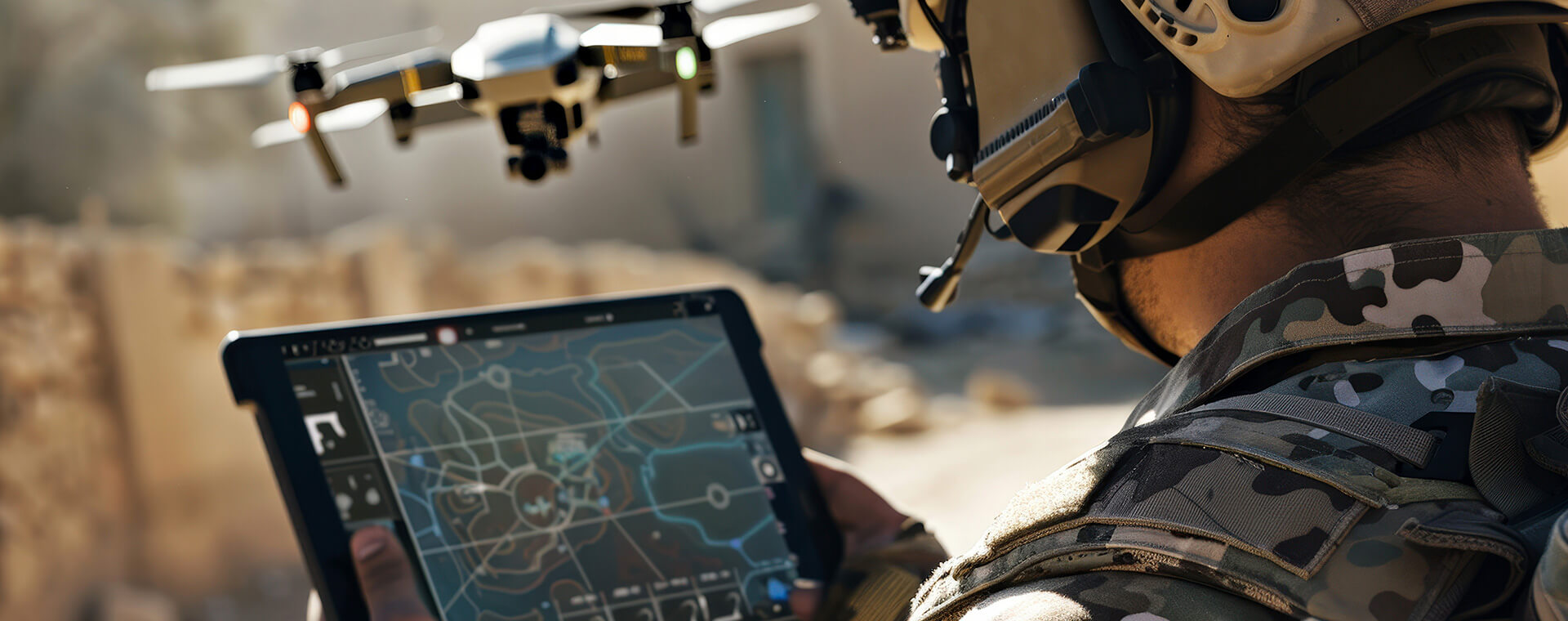
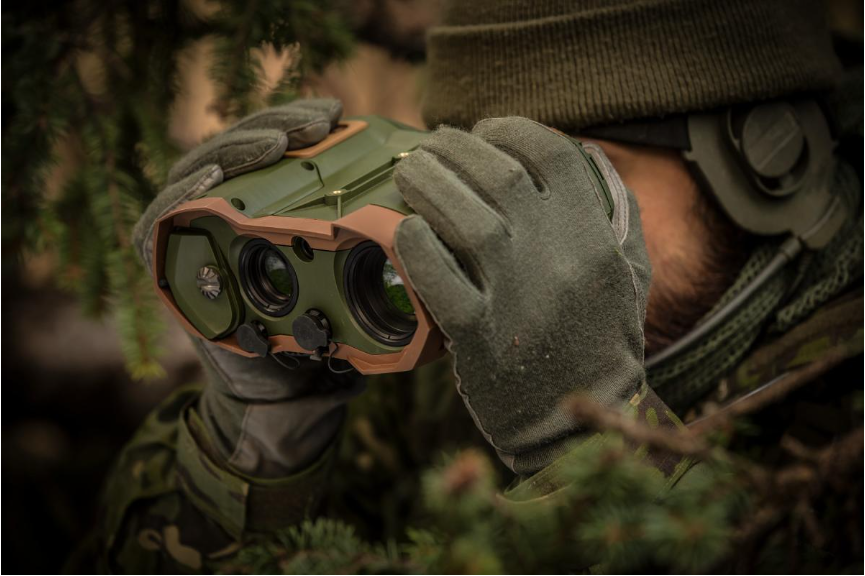
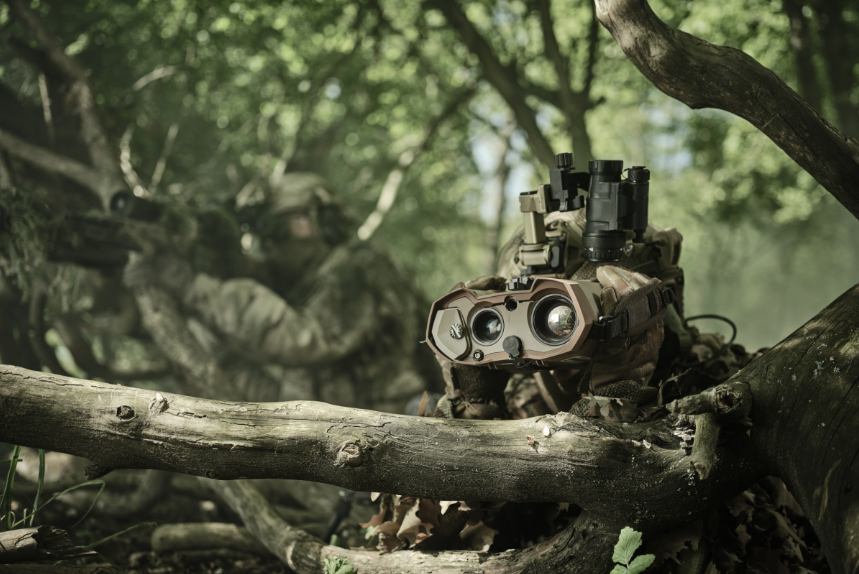
RUThe core of optoelectronic reconnaissance equipment is to provide "eyes" for various platforms. The main product forms include: Pods: such as the general-purpose airborne tilting and vertical optoelectronic reconnaissance pods developed by Chengdu Sanhang Electromechanical. They can provide fighter jets with optical and infrared imaging capabilities at high altitudes and long distances outside the defense zone, enabling the aircraft to have powerful battlefield perception capabilities. Vehicle-mounted systems: reconnaissance systems integrated on vehicle platforms. Modern reconnaissance vehicles are evolving into intelligent platforms that integrate artificial intelligence, unmanned technology, and stealth design, aiming to evolve from "seeing" to "seeing clearly and judging accurately". Individual/handheld devices: such as various infrared/low-light night vision devices, handheld detectors, anti-sniper detection equipment, etc., to enhance the intelligence acquisition capabilities of individual soldiers and small teams. Core components: including basic optoelectronic products such as infrared detectors and laser crystals. Enterprises such as China Electronics Technology Group Corporation (CETC) are committed to achieving self-control of these high-end devices.
Technology Center
Technology Center
FAQ
-
What are the main product forms of photoelectric reconnaissance equipment?
-
-
What is the current research and development trend of optoelectronic reconnaissance technology?
-
The main trends are reflected in multi-technology integration and breakthroughs in performance limits: Multi-technology integration: Reconnaissance equipment is no longer an independent sensor, but an intelligent node integrating technologies such as AI image recognition, high-speed information processing, and autonomous unmanned control. Performance maximization: Research and development continuously pursue longer detection ranges and higher resolutions. For example, a research team in China has developed a remote laser imaging system capable of reading extremely small text from about 1.6 kilometers away, demonstrating the potential for fine recognition at extreme distances.
-
How can auxiliary shooting equipment help shooters improve their accuracy?
-
This type of equipment integrates multiple sensors and algorithms to automatically calculate and correct firing parameters, reducing the impact of human factors. The core functional modules typically include: Environmental perception module: Utilizing laser range finders, wind speed sensors, and other devices to obtain key data such as target distance and environmental wind speed. Ballistic calculation module: Combining built-in ballistic models such as bullet velocity to calculate the correction amount due to bullet drop and wind drift. Dynamic compensation module: Tracking moving targets through image analysis, calculating and providing the firing lead. Auxiliary actuator: Some advanced systems (such as certain patented schemes) propose executing corrections by automatically adjusting the barrel angle or assisting in controlling arm muscle stability through electrical stimulation.
-
What characteristics does the research and development of auxiliary shooting systems exhibit?
-
Research and development (R&D) is characterized by the evolution from single-point assistance to comprehensive intelligent systems. Early patents focused on a single function (such as automatic azimuth calibration), while newer patents and systems emphasize multi-sensor data fusion and fully automatic computational compensation, forming a closed-loop intelligent shooting decision-making assistance system.
-
What is non-lethal denial equipment? What is a cutting-edge application case?
-
Non-lethal deterrence equipment is designed to stop, delay, or disrupt hostile behavior through non-lethal means (without causing permanent injury or death). A cutting-edge application is the integration of such equipment with drone platforms. For example, the "MERLIN-Interceptor" system developed by Wrap Technologies is a mission module that can be mounted on third-party drones. It integrates the company's mature BolaWrap® non-lethal entanglement technology, enabling it to launch entanglement nets from the air towards ground targets (such as potential attackers), rendering them incapacitated, thus achieving remote, non-lethal physical intervention. This transforms drones from "observers" into "first responders" that can actively "deal with" threats
-
Where is the focus of innovation in non-lethal denial technology?
-
The focus of innovation lies in "platform integration" and "response prepositioning". Platform integration: It involves miniaturizing and modularizing proven non-lethal technologies (such as kinetic energy bullets, entanglement nets, sound and light bullets, etc.), making them compatible with new mobile platforms like drones and robots, and expanding their application scenarios. Response prepositioning: Its core concept is to intervene and control the situation through technological means before the conflict escalates into lethal firefights, thereby maximizing the safety of all parties involved.
-
What are your expectations for the future development of the entire industry?
-
In the future, these equipment will no longer exist as isolated "individual items", but will further evolve into perception and execution nodes within a "networked intelligent combat system". Multidimensional intelligence obtained by electro-optical reconnaissance equipment can be distributed in real-time to auxiliary shooting equipment, providing it with beyond-visual-range target information. Guided by reconnaissance information, unmanned non-lethal anti-access equipment can conduct precise and graded force application against specific targets. All units coordinate through data links, forming a rapid closed loop of "discovery-identification-decision-action-evaluation", ultimately enhancing overall mission effectiveness and decision-making flexibility.
File Download
Videos
-

 IR101L使用教程
 -
 IR101L使用教程

-

+86 137 7755 9696


©2026 Zhejiang Tech-Special Equipment Co., Ltd. All rights reserved.
浙ICP备2023012381号-1Communicate and cooperate with us
Tel+86 137 7755 9696
E-mailadmin@tech-special.com
Add Room 401, Xixi Creative Building, No. 718, Wen Er West Road, Xihu District, Hangzhou City, Zhejiang Province